Common challenges include limited digital skills, poor internet access, initial costs of technology, and lack of training. These challenges can be reduced through education, government support, and NGO programs.
Introduction
Indoor plants are more than just decorative items; they purify the air, reduce stress, and enhance the beauty of any room. But keeping indoor plants healthy can be challenging, especially if you want to avoid chemical fertilizers and pesticides. Natural methods for plant care are not only safe for your family and animals but also improve the longevity and vibrancy of your indoor greenery.
This article explores proven, natural strategies to keep indoor plants thriving. From watering and soil care to pest management and lighting, you’ll learn techniques that are beginner-friendly and expert-approved.
1. Choosing the Right Indoor Plants
1.1 Consider Your Environment
Not all plants thrive indoors. Consider:
Light conditions: Bright, medium, or low light
Humidity levels: Some plants prefer higher humidity
Temperature stability: Avoid drafts and extreme temperature changes
Examples of easy-care indoor plants:
Snake Plant (Sansevieria)
Pothos
Spider Plant
Peace Lily
ZZ Plant
1.2 Match Plants to Your Skill Level
Beginners: Snake Plant, ZZ Plant, Spider Plant
Intermediate: Fiddle Leaf Fig, Rubber Plant
Advanced: Orchids, Bonsai
2. Natural Watering Techniques
Watering is crucial but often overdone. Here’s how to water naturally:
2.1 Use Rainwater or Filtered Water
Tap water may contain chlorine or salts that harm sensitive plants
Collect rainwater or use filtered water for better soil health
2.2 Check Soil Moisture Before Watering
Stick a finger 1–2 inches into the soil
Only water when the soil feels dry at root level
Avoid overwatering to prevent root rot
2.3 Self-Watering Methods
Use clay self-watering spikes
Create a wicking system using a container of water and a cotton rope
3. Natural Fertilizing Methods
Indoor plants benefit from nutrients, but natural fertilizers are safer than synthetic options.
3.1 Kitchen Waste Fertilizers
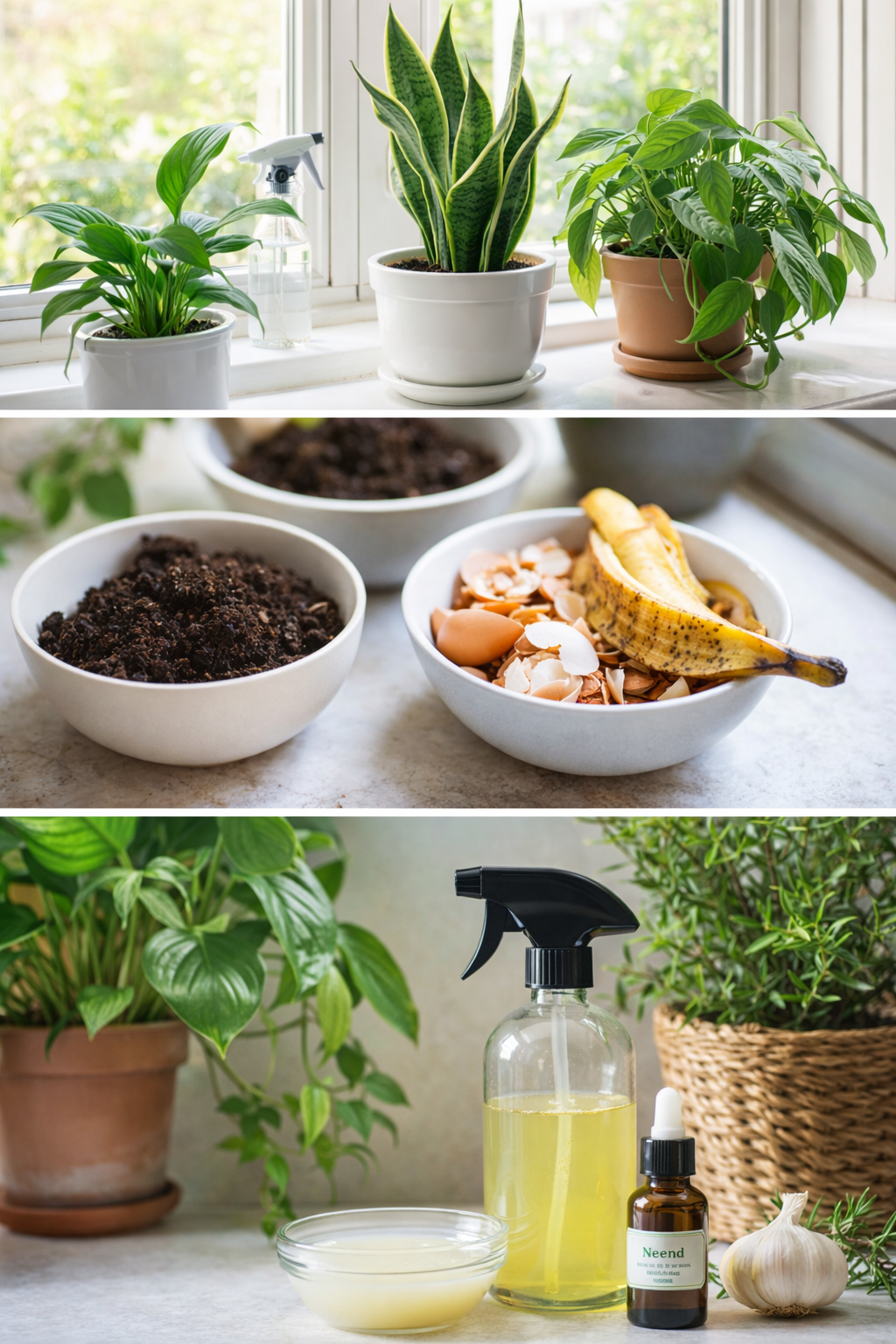
Coffee grounds: Add nitrogen to soil
Banana peels: Provide potassium
Eggshells: Rich in calcium
3.2 Organic Compost
Make indoor compost using vegetable peels, tea leaves, and coffee grounds
Mix a small amount into plant soil monthly
3.3 Liquid Fertilizers
Comfrey tea: Fast-acting liquid fertilizer
Seaweed extract: Provides micro-nutrients and boosts plant immunity
4. Soil and Potting for Healthy Plants
4.1 Choose the Right Soil
Use well-draining potting mix
Mix in perlite or sand to improve aeration
Avoid garden soil for indoor pots
4.2 Repotting Naturally
Repot every 1–2 years to refresh soil
Use biodegradable pots or clay pots to improve drainage
5. Lighting for Indoor Plants
5.1 Understand Light Requirements
Low-light: Snake plant, ZZ plant
Medium-light: Pothos, Peace Lily
Bright-light: Fiddle Leaf Fig, Succulents
5.2 Natural Light Optimization
Place near windows but avoid direct harsh sunlight
Rotate plants periodically for even growth
5.3 Artificial Lighting
Use LED grow lights if natural light is insufficient
Mimic daylight cycles (12–16 hours/day for most indoor plants)
6. Natural Pest Control Methods
Indoor plants can attract pests like aphids, spider mites, and mealybugs. Use natural methods to keep them in check:
6.1 Neem Oil Spray
Mix 1–2 tsp neem oil with water and a few drops of liquid soap
Spray leaves weekly to deter pests
6.2 Soap and Water Solution
Mild soap solution for removing aphids or mites
Wipe leaves gently to avoid damaging them
6.3 Beneficial Insects
Introduce ladybugs or predatory mites in indoor greenhouse setups
6.4 Homemade Repellents
Garlic and chili water spray
Essential oils like peppermint or rosemary.
7. Maintaining Proper Humidity
7.1 Humidity Requirements
Tropical plants: 50–70% humidity
Succulents and cacti: 30–40% humidity
7.2 Natural Ways to Increase Humidity
Place plants on trays filled with water and pebbles
Group plants together to create micro-humidity zones
Mist plants occasionally with water
8. Temperature and Air Circulation
Keep plants away from heaters and air conditioners.
Avoid cold drafts in the winter.
Use fans. They will provide gentle air circulation. This will prevent fungal growth.
9. Pruning and Maintenance:
9.1 Regular pruning:
Remove dead or yellowing leaves.
Prune stems to encourage new growth.
9.2 Cleaning Leaves:
Wipe leaves with a damp cloth to remove dust.
It promotes photosynthesis and protects against animals.
10. Propagation for Healthy Plant Growth
10.1 Natural Propagation Methods
Pothos and Spider Plant stem cuttings are available.
Succulents and African violets can be propagated by leaf cuttings.
Division (Peace Lily, Snake Plant)
10.2 Benefits:
Multiply your plants without buying new ones.
Refresh old soil and encourage strong root growth.
11. Seasonal Care Tips
11.1 Spring and Summer
Increase watering slightly
Fertilize monthly with natural fertilizers
11.2 Fall and Winter
Reduce watering
Move plants closer to light sources
Minimize fertilization
12. Common Indoor Plant Problems and Natural Solutions
| Problem | Natural Solution |
| Yellow leaves | Reduce watering, check for root rot |
| Wilting | Increase humidity or water properly |
| Pests | Neem oil, soap spray, or essential oils |
| Slow growth | Repot with fresh soil, use organic fertilizers |
| Mold in soil | Improve drainage, reduce humidity around roots |
13. Eco-Friendly Indoor Plant Hacks
Use recycled containers as pots.
Collect rainwater for watering.
Create DIY plant sprays using kitchen ingredients.
The mixing of coffee grounds or compost into soil is preferable to the use of synthetic fertilizers.
14. Benefits of Natural Indoor Plant Care
Pets and children can safely use this product.
It’s sustainable and affordable.
Strong root systems and vibrant leaves are promoted by this.
It prevents chemical buildup in the home environment.
15. Recommended Tools for Natural Indoor Gardening
Small watering can
Spray bottle for misting
Organic fertilizers (compost, seaweed, eggshells)
Humidity tray or pebbles
Pruning scissors
Grow lights (optional)
Conclusion:
Proper care of indoor plants naturally ensures a healthy, vibrant, and sustainable indoor garden. With a focus on proper watering, natural fertilizers, pest control, light optimization, and soil maintenance, anyone can cultivate thriving indoor greenery free of harmful chemicals.
These eco-friendly tips are great for beginners and experienced indoor gardeners alike. They’ll help your plants flourish year-round, purify the air in your home, and enhance your living space.
A: Check the soil; water when the top 1–2 inches are dry.
A: Yes, coffee grounds, eggshells, and banana peels are excellent natural fertilizers.
A: Group plants, use humidity trays, or mist leaves occasionally.
A: Use neem oil, mild soap sprays, or essential oils like peppermint.
Next link https://diyaaronlineaffiliatemarketer.it.com/wp-admin/post.php?post=120&action=edit
Leave a Reply