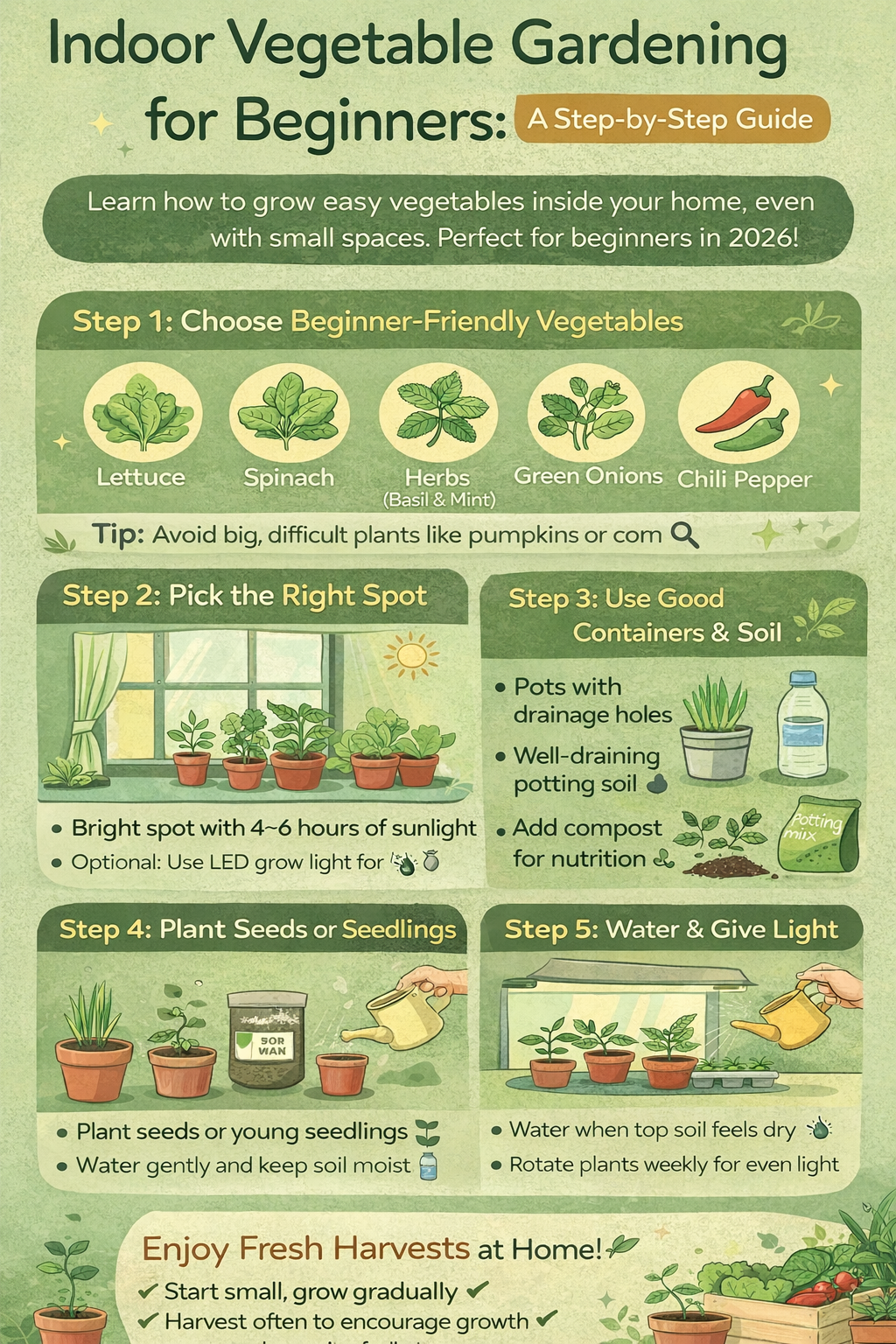
Indoor vegetable gardening is becoming increasingly popular among urban dwellers, beginners, and anyone who wants fresh, healthy food at home without the need for a backyard. Whether you live in an apartment, a small house, or simply want to have vegetables within arm’s reach, indoor gardening is a practical and rewarding solution. In this comprehensive guide, we’ll explore everything you need to start your indoor vegetable garden successfully in 2026.
Why Indoor Vegetable Gardening Is Perfect for Beginners
Indoor gardening offers many benefits for beginners and experienced gardeners alike:
- Access to fresh vegetables year-round: Grow lettuce, spinach, herbs, peppers, and more no matter the season.
- Space-saving: Perfect for apartments, small homes, or areas without outdoor space.
- Cost-effective: You can start with minimal investment using small containers, DIY pots, and basic tools.
- Health benefits: Fresh vegetables, stress reduction, improved air quality, and a sense of accomplishment.
- Educational: Learn about plant growth, care, and sustainable living.
Even people with no gardening experience can start growing vegetables indoors with patience, planning, and a few essential tools.
Step 1: Choose the Right Location
The location of your indoor vegetable garden will determine how healthy and productive your plants are. Here’s what to consider:
Light
Most vegetables need 4–6 hours of bright light daily. Choose:
- A south-facing or east-facing window
- A space with natural indirect light
- Or supplement with LED grow lights for low-light areas
Temperature
Vegetables prefer 18–25°C. Avoid placing plants near heaters, air conditioners, or drafty windows.
Space
Even a small windowsill, shelf, or balcony can work. Vertical setups like stacked shelves or hanging planters help maximize limited space.
Step 2: Pick Beginner-Friendly Vegetables
Start with vegetables that grow well indoors and don’t require too much maintenance. Some excellent beginner-friendly options include:
- Lettuce – Fast-growing, perfect for containers.
- Spinach – Thrives in pots with well-draining soil.
- Green onions – Easy to regrow from scraps.
- Herbs – Basil, mint, parsley, and cilantro grow quickly and can be harvested frequently.
- Chili peppers – Compact and productive with enough light.
- Radishes – Quick harvest (3–4 weeks).
Avoid plants that require deep soil or extensive sunlight, like large pumpkins or corn, until you gain experience.
Step 3: Choose Containers and Pots
Containers aren’t just decorative—they’re essential for healthy plant growth. Key tips:
- Drainage: Always use pots with drainage holes to prevent root rot.
- Size: Containers should be slightly larger than the root system. Small herbs can grow in 10–15 cm pots; lettuce may need 20–25 cm.
- Material: Plastic, ceramic, or terracotta pots work fine. DIY options like tin cans, recycled bottles, or boxes can save money.
- Arrangement: Use vertical shelves or plant stands to maximize light exposure.
Step 4: Select the Right Soil
Soil quality is crucial for indoor vegetable gardening. Follow these guidelines:
- Use light, well-draining potting soil designed for indoor plants.
- Avoid garden soil; it’s often too heavy and may harbor pests.
- Mix compost or organic matter to provide nutrients.
- Add perlite or sand for better drainage if necessary.
Tip: Different vegetables have different nutrient needs. Leafy greens need nitrogen-rich soil, while fruiting plants like peppers benefit from a balanced fertilizer.
Step 5: Planting Seeds or Seedlings
Both seeds and seedlings can work for beginners:
Seeds
- Fill containers with soil
- Plant seeds according to packet depth instructions
- Water gently and keep soil moist until germination
Seedlings
- Gently remove seedlings from their original container
- Place in new pot and cover roots lightly with soil
- Water slowly to help plants settle
Starting with seedlings is often easier and faster for beginners.
Step 6: Watering Basics
Overwatering is the #1 mistake for indoor gardeners. Keep these rules in mind:
- Check the soil moisture before watering. Only water when the top 2–3 cm of soil is dry.
- Water slowly and evenly, ensuring drainage.
- Avoid leaving standing water in saucers.
- Reduce watering in winter when plant growth slows.
Tip: Herbs like mint and basil need slightly more frequent watering, while lettuce and spinach prefer moderately moist soil.
Step 7: Provide Adequate Light
Vegetables need light to grow. If natural sunlight is limited:
- Use LED grow lights for 10–12 hours a day.
- Keep lights 20–30 cm above plants to prevent legginess.
- Rotate plants weekly for even growth.
Low-light vegetables like leafy greens may tolerate less light, but fruiting plants require bright, indirect light or supplemental lighting.
Step 8: Fertilizing for Healthy Growth
Indoor plants can quickly deplete soil nutrients. Fertilize carefully:
- Use liquid or slow-release fertilizer for indoor vegetables.
- Feed leafy greens every 2–3 weeks.
- Fertilize fruiting plants like chili peppers once a month.
- Avoid overfertilizing—too much fertilizer can burn roots.
Tip: Organic options like compost tea or diluted fish emulsion are beginner-friendly and safe.
Step 9: Monitor Temperature and Humidity
Indoor plants prefer stable environments:
- Maintain 18–25°C for most vegetables.
- Increase humidity for tropical herbs if the air is dry (group plants together or use pebble trays).
- Avoid placing plants near vents or heaters, which can stress them.
Step 10: Regular Maintenance
Even low-maintenance vegetables need attention:
- Remove yellow or dead leaves.
- Clean leaves occasionally to improve photosynthesis.
- Repot plants when roots outgrow containers.
- Check for pests like aphids, spider mites, or fungus gnats.
Consistency is more important than perfection—daily observation helps prevent problems early.
Step 11: Harvesting Tips
Proper harvesting encourages growth:
- Leafy greens: Cut outer leaves and let inner leaves grow.
- Herbs: Harvest regularly but avoid taking more than ⅓ of the plant at once.
- Fruit vegetables: Pick peppers or small tomatoes when fully colored for best flavor.
Tip: Harvest in the morning for fresher, tastier vegetables.
Common Indoor Vegetable Gardening Mistakes
- Overwatering – Leads to root rot and yellow leaves.
- Poor lighting – Weak, leggy growth; pale leaves.
- Using garden soil – Heavy, compacted soil suffocates roots.
- Wrong container size – Roots can become crowded or waterlogged.
- Neglecting pests – Early intervention prevents infestations.
- Expecting instant results – Indoor vegetables grow slower than outdoor ones; patience is key.
DIY Tips to Reduce Costs
Indoor vegetable gardening doesn’t have to be expensive. Consider:
- DIY containers: Reuse tin cans, plastic bottles, or cardboard boxes.
- Regrow vegetables: Green onions, lettuce, celery, and herbs can grow from scraps.
- Compost at home: Use vegetable peels to enrich soil naturally.
- Use natural light: Position plants near windows instead of buying lights.
Even beginners can start with under $20 in supplies.
Best Indoor Vegetables for Small Spaces
- Leafy greens: Lettuce, spinach, arugula
- Herbs: Basil, mint, parsley, chives
- Small fruiting plants: Chili peppers, cherry tomatoes
- Root vegetables: Radishes, green onions
- Microgreens: Easy to grow in trays and harvest in 2–3 weeks
Indoor Gardening Schedule for Beginners
Weekly Routine:
- Check soil moisture: Water if dry
- Inspect for pests: Treat early
- Rotate plants: Ensure even light exposure
- Harvest small portions: Encourage regrowth
Monthly Routine:
- Fertilize as needed
- Repot or refresh soil
- Prune overcrowded plants
Consistency over time ensures a thriving indoor vegetable garden.
Benefits of Indoor Vegetable Gardening
- Year-round harvest – Grow fresh food regardless of weather
- Healthier lifestyle – Reduce store-bought vegetable expenses and enjoy organic produce
- Educational – Learn about plants, nutrition, and sustainability
- Stress relief – Caring for plants improves mood and reduces stress
- Eco-friendly – Reduces food miles and packaging waste
Yes, with LED grow lights. Leafy greens need less light, while fruiting plants require more.
Water only when the top 2–3 cm of soil is dry. Most plants need water every 5–10 days depending on conditions.
Leafy greens like lettuce, spinach, and herbs like basil, mint, and parsley. Green onions are also very easy to regrow.
No. Basic pots, quality soil, a small watering can, and sunlight (or grow lights) are enough.
Leafy greens: 3–4 weeks; Herbs: 4–6 weeks; Fruit vegetables: 6–10 weeks depending on the plant and care.
Final Thoughts
Indoor vegetable gardening is a rewarding and beginner-friendly way to grow fresh, healthy food at home. By following this step-by-step guide, starting small, and being consistent with care, even beginners can enjoy a thriving indoor garden.
Remember:
- Start with easy-to-grow vegetables
- Use containers and soil wisely
- Provide adequate light and water
- Monitor plants regularly
- Harvest correctly and enjoy your produce
Indoor gardening is not just about food—it’s about learning, creativity, and improving your living space. Start small, be patient, and watch your indoor vegetable garden flourish in 2026.
Next link
https://diyaaronlineaffiliatemarketer.it.com/wp-admin/post.php?post=108&action
Leave a Reply