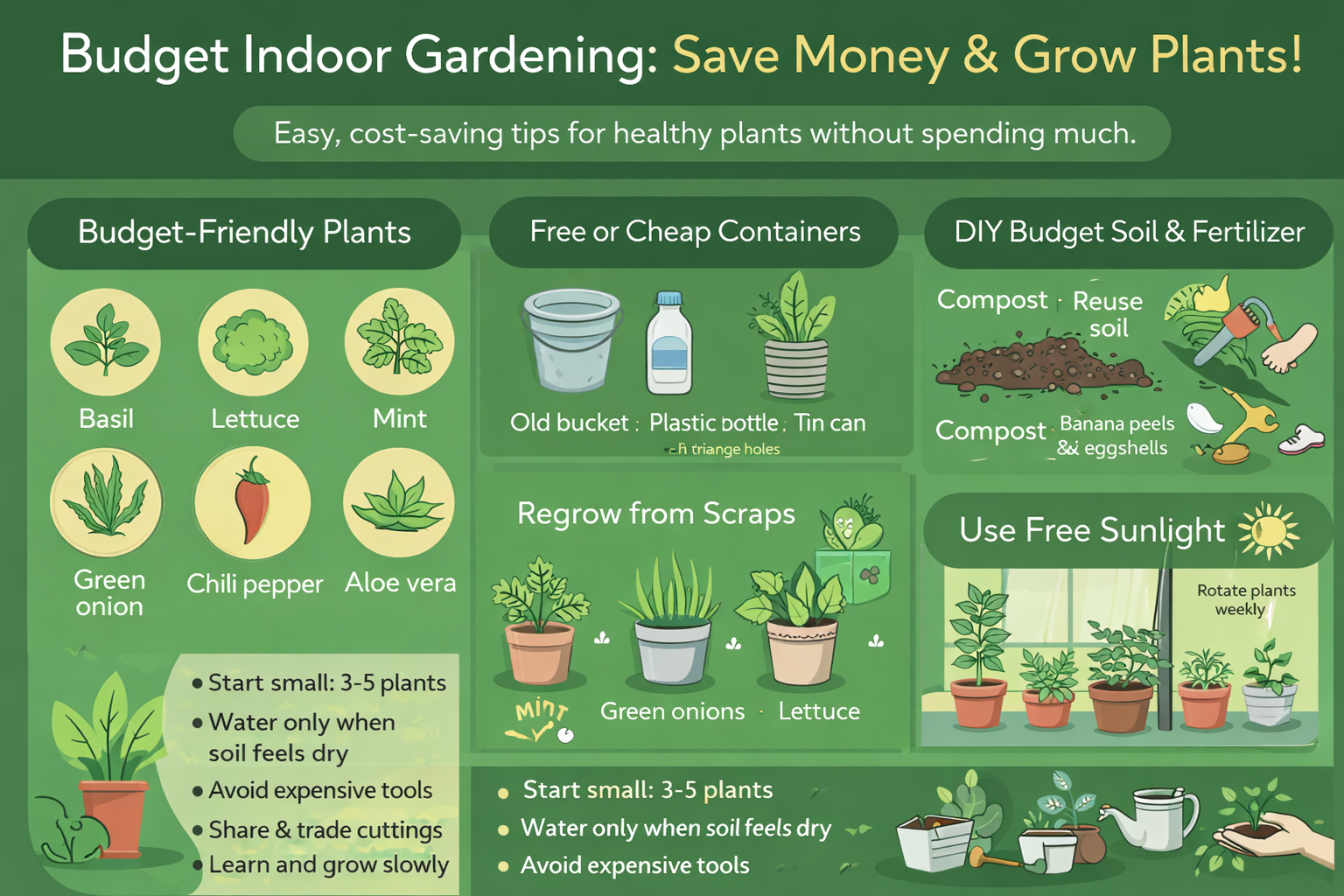
Learn how to start budget indoor gardening without spending much money. Discover low-cost tools, free planting ideas, and beginner-friendly tips to grow healthy plants at home in 2026.
Introduction: Indoor Gardening on a Budget Is Possible 🌱
Many people believe indoor gardening is expensive. They think you need fancy pots, grow lights, and costly tools. The truth is very different.
You can start indoor gardening on a very small budget and still grow healthy, beautiful plants at home. Whether you live in a small apartment, rent a house, or have limited income, indoor gardening is possible for everyone.
This guide will show you practical, low-cost ways to grow plants indoors without spending much money. It is designed especially for beginners who want results without wasting cash.
Why Budget Indoor Gardening Is Growing in Popularity
Indoor gardening has become popular for several reasons:
- Rising food prices
- Small living spaces
- Desire for healthy, chemical-free food
- Need for relaxing hobbies at home
Budget indoor gardening helps you:
- Save money on groceries
- Grow fresh herbs and vegetables
- Improve air quality indoors
- Learn valuable skills
You don’t need luxury equipment — you need smart choices.
Start with the Right Plants (Low-Cost & Easy)
Choosing the right plants is the first step to saving money.
Best Budget-Friendly Indoor Plants
These plants grow well indoors and require minimal investment:
- Basil
- Mint
- Green onions
- Lettuce
- Chili peppers
- Coriander (cilantro)
- Aloe vera
These plants:
- Grow fast
- Need little care
- Can be grown from seeds or kitchen scraps
Avoid expensive or slow-growing plants when starting.
Use Free or Cheap Containers
You don’t need to buy fancy pots.
Free Container Ideas
Look around your home. You can reuse:
- Plastic bottles
- Old buckets
- Food containers
- Tin cans
- Broken buckets
Just make sure:
- Containers have drainage holes
- They are clean
This saves money and reduces waste.
Soil: Don’t Buy Expensive Mixes
Soil can be costly, but you have alternatives.
Budget Soil Options
- Mix garden soil with compost
- Use kitchen compost (vegetable peels, eggshells)
- Reuse soil from old plants (refresh it with compost)
If you buy soil:
- Choose basic potting mix
- Avoid premium branded soils at the beginning
Healthy soil doesn’t need to be expensive — it needs to be alive.
Grow Plants from Seeds or Kitchen Scraps
This is one of the cheapest methods in indoor gardening.
Plants You Can Regrow for Free
- Green onions (from roots)
- Lettuce (from base)
- Basil (from cuttings)
- Mint (from cuttings)
Seeds are also cheap and last long. One seed packet can grow dozens of plants.
Light: Use Natural Sunlight First
Grow lights are expensive and not required at the start.
How to Use Free Sunlight
- Place plants near windows
- South-facing windows are best
- Rotate plants weekly
Most beginner plants grow well with 4–6 hours of sunlight daily.
Only consider grow lights later if sunlight is limited.
Watering: Simple and Cost-Free
Overwatering is a common beginner mistake.
Budget Watering Tips
- Use room-temperature water
- Water only when soil feels dry
- Reuse leftover drinking water
You don’t need special watering tools — a cup or bottle works fine.
Make Your Own Fertilizer at Home
You don’t need chemical fertilizers.
Free Homemade Fertilizers
- Banana peels (for potassium)
- Eggshell powder (for calcium)
- Compost tea (from kitchen waste)
These natural options keep plants healthy without extra cost.
Avoid Beginner Mistakes That Waste Money
Mistakes cost money. Avoid these common ones:
- Buying too many plants at once
- Using expensive tools early
- Overwatering plants
- Ignoring sunlight needs
- Planting difficult plants first
Start small and grow slowly.
Low-Cost Tools You Actually Need
You only need a few basic items:
- Containers
- Soil
- Seeds or cuttings
- Water
Optional but cheap:
- Small hand shovel
- Old spoon or stick
- Gloves (optional)
Don’t buy full gardening kits at the beginning.
Create a Small Indoor Garden Setup
You don’t need a big space.
Ideal Budget Locations
- Windowsill
- Balcony corner
- Kitchen shelf
- Near a door with light
Start with 3–5 plants, then expand.
How Budget Indoor Gardening Saves Money Long-Term
Indoor gardening is not just a hobby — it’s an investment.
You save money by:
- Buying fewer vegetables
- Reusing seeds
- Reducing waste
- Growing year-round
Over time, plants pay for themselves.
Budget Indoor Gardening for Beginners: Weekly Care Routine
Simple routine:
- Check soil moisture
- Rotate plants
- Remove dead leaves
- Observe plant growth
This takes less than 10 minutes a day.
Indoor Gardening Without Stress
Budget gardening should be enjoyable, not stressful.
- Don’t compare your plants to others
- Learn from mistakes
- Celebrate small growth
Plants grow at their own pace.
Future Expansion Without Spending Much
Once you gain experience, you can:
- Propagate plants
- Share cuttings
- Trade seeds
- Upgrade slowly
You don’t need everything at once.
Yes. You can start indoor gardening with almost no money by reusing containers, growing plants from kitchen scraps, and using natural sunlight instead of grow lights.
The cheapest indoor plants include:
Green onions
Mint
Basil
Lettuce
Coriander
Aloe vera
These plants grow fast and require minimal care.
No. Grow lights are not required for beginners. Most indoor plants grow well with natural sunlight from windows, especially south-facing windows.
You can reuse:
Plastic bottles
Food containers
Buckets
Tin cans
Just make sure there are drainage holes at the bottom.
Water indoor plants only when the soil feels dry. Overwatering is more harmful than underwatering and can kill plants quickly.
Yes. You can use:
Banana peels
Eggshell powder
Kitchen compost
These natural fertilizers are free and safe for plants.
Indoor gardening is perfect for beginners because:
It needs little space
It is easy to control
Plants are protected from pests
Starting indoors helps beginners learn faster.
Most indoor plants show growth within 7–14 days. Herbs like basil and mint grow especially fast.
Yes. Over time, indoor gardening reduces grocery expenses, especially for herbs and leafy vegetables that are expensive in markets.
Yes. Indoor gardening allows you to grow plants all year because they are not affected by outdoor weather conditions.
Final Thoughts: Grow Smart, Not Expensive 🌿
Budget indoor gardening proves one thing:
You don’t need money to grow plants — you need knowledge.
By choosing easy plants, reusing materials, and using natural resources, anyone can grow a healthy indoor garden without spending much.
Start small, stay consistent, and let your garden grow with you.
thanks
Next article https://diyaaronlineaffiliatemarketer.it.com/wp-admin/post.php?post=104&action
Leave a Reply