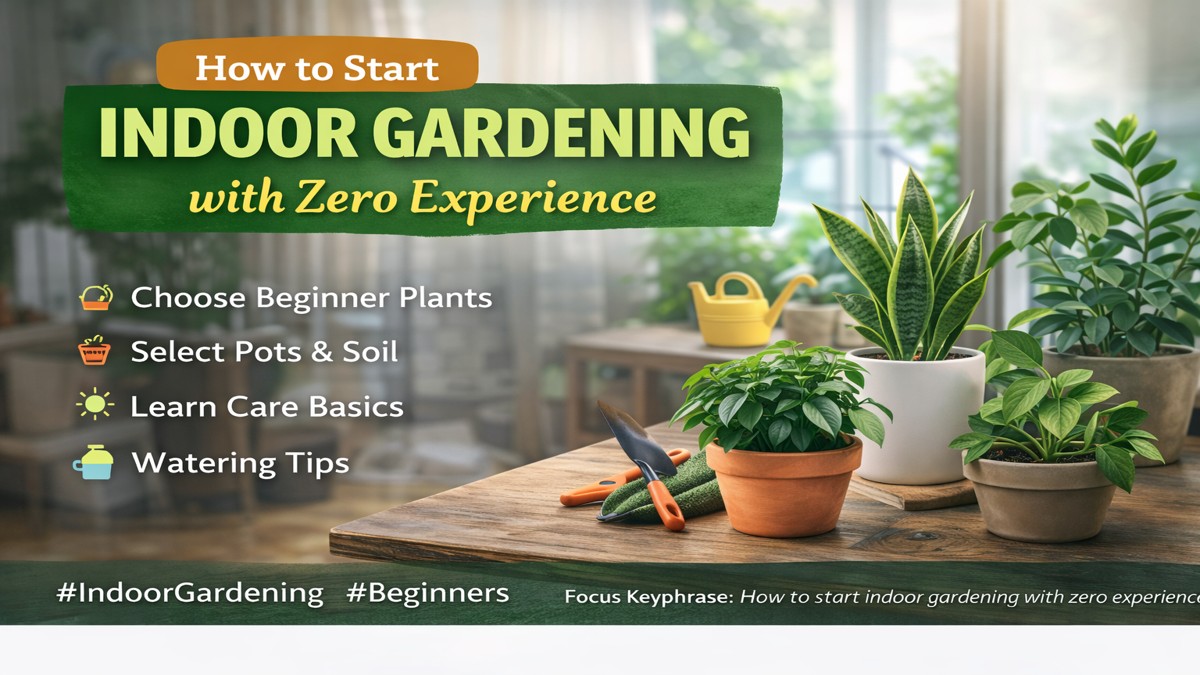
Indoor gardening is becoming increasingly popular for people of all ages, especially beginners who want to enjoy greenery at home without a backyard. Even if you have zero experience, starting an indoor garden is easier than you think.
This complete guide will show you how to start indoor gardening from scratch, including choosing plants, pots, soil, lighting, watering, and care tips. By the end of this guide, you will have the confidence to create a thriving indoor garden.
Why Start Indoor Gardening?
Indoor gardening has many benefits, especially for beginners:
- Boosts mental health: Plants reduce stress and improve mood
- Improves air quality: Many indoor plants purify the air naturally
- Provides fresh herbs and vegetables: Grow food indoors
- Adds beauty to your home: Greenery creates a welcoming atmosphere
- Teaches responsibility: Caring for plants develops routine and focus
Even people with no outdoor space or gardening knowledge can start an indoor garden successfully.
Step 1: Choose the Right Location
Choosing the right spot is crucial for indoor gardening.
Consider the following factors:
- Light availability: Most plants need indirect sunlight
- Temperature: Keep plants away from extreme heat or cold
- Space: Small shelves, windowsills, and tables can work
- Humidity: Kitchens and bathrooms often have higher humidity, suitable for certain plants
Tip: Begin with a bright window or an area with filtered sunlight.
Step 2: Select Beginner-Friendly Indoor Plants
Starting with easy-to-care-for plants ensures your success. Low-maintenance plants are ideal for beginners.
Top beginner-friendly indoor plants:
- Snake Plant (Sansevieria) – Thrives in low light, drought-tolerant
- ZZ Plant (Zamioculcas zamiifolia) – Slow-growing and forgiving
- Pothos (Devil’s Ivy) – Easy to grow in hanging baskets or pots
- Spider Plant – Produces baby plants, great for propagation
- Aloe Vera – Medicinal and minimal watering required
- Peace Lily (Spathiphyllum) – Beautiful white flowers, low light tolerance
- Cast Iron Plant (Aspidistra) – Almost impossible to kill
Tip: Start with 1–3 plants to avoid overwhelming yourself.
Step 3: Choose Pots and Containers
Pots and containers are not just decorative—they are essential for plant health.
Tips for beginners:
- Use pots with drainage holes to prevent root rot
- Choose containers that fit your space
- Materials: Terracotta, ceramic, or plastic
- Size: Slightly larger than the root ball
Beginner mistake: Using pots without drainage or too small for the plant.
Step 4: Select the Right Soil
Soil quality is key for indoor gardening.
- Use well-draining soil
- Avoid cheap garden soil (can be too dense for pots)
- Consider pre-mixed indoor potting soil
- Add perlite or sand for better drainage
Pro tip: Different plants have specific soil needs. Check before planting.
Step 5: Understand Watering Basics
Overwatering is the #1 mistake beginners make. Follow these rules:
- Check soil moisture before watering
- Water only when the top inch of soil is dry
- Reduce watering in winter
- Avoid leaving water in saucers
Plants like Snake Plant and ZZ Plant tolerate drought, making them perfect for beginners.
Step 6: Learn About Light Requirements
Plants need light to grow, but not all plants need direct sunlight.
- Low light plants: ZZ Plant, Cast Iron Plant
- Medium light: Pothos, Peace Lily
- Bright indirect light: Aloe Vera, Spider Plant
Tip: Rotate plants every few weeks for even growth.
Step 7: Fertilize Properly
Fertilizing helps plants grow strong indoors.
- Use balanced liquid fertilizer for indoor plants
- Fertilize once a month during growing season
- Avoid over-fertilizing (can burn roots)
Step 8: Monitor Temperature and Humidity
Indoor plants prefer stable environments.
- Keep indoor temperature between 18–25°C
- Increase humidity for tropical plants (use pebble trays or humidifiers)
- Avoid placing plants near heaters or air conditioners
Step 9: Regular Maintenance
Even low-maintenance plants need basic care:
- Remove dead or yellowing leaves
- Dust leaves occasionally to improve photosynthesis
- Repot when the plant outgrows the container
- Check for pests (spider mites, aphids)
Consistency is more important than perfection.
Step 10: Start Small and Learn Gradually
Indoor gardening is a learning process. Beginners often get overwhelmed by too many plants. Start small and gradually expand your indoor garden.
Common Indoor Gardening Mistakes to Avoid
- Overwatering: Most indoor plants die from excess water
- Poor lighting: Plants not suited for low light
- Wrong soil type: Heavy garden soil can suffocate roots
- Neglecting plant rotation: Uneven growth
- Ignoring pests: Early intervention is easier
How to Choose Your Indoor Garden Style
Indoor gardening can be adapted to your space and preferences:
- Herb garden: Basil, parsley, mint on windowsills
- Vegetable garden: Lettuce, spinach, small peppers
- Ornamental plants: Pothos, Peace Lily, Snake Plant
- Terrariums & mini gardens: Small, decorative indoor setups
Yes, start with low-maintenance plants and follow basic care tips.
Most indoor plants need water every 1–2 weeks, depending on soil dryness.
Yes, it reduces stress, purifies air, and improves mood.
Snake Plant, ZZ Plant, Pothos, and Spider Plant are the easiest.
Yes, herbs, lettuce, spinach, and peppers are perfect for indoor gardening.
Tips for Long-Term Indoor Gardening Success
- Observe plants regularly
- Adjust water, light, and fertilizer as needed
- Keep a plant journal to track growth and care
- Start small, expand gradually
- Join online communities for advice and support
Indoor gardening is both fun and rewarding, even for absolute beginners.
Final Thoughts
Starting an indoor garden with zero experience is possible if you begin with the right plants, soil, pots, and care routine. By following this step-by-step guide, you can grow a thriving indoor garden that beautifies your home, improves health, and provides fresh herbs or vegetables.
Remember: start small, be consistent, and enjoy the journey of indoor gardening 🌿.
Leave a Reply