Category: Gardening & Agriculture

Gardening and Agriculture focuses on practical gardening tips, beginner friendly plant care, and modern agricultural knowledge. This category covers indoor and outdoor gardening, sustainable farming ideas, agri-business insights, and ethical affiliate marketing guides related to agriculture-helping beginners and professionals grow skills, crops, and income responsibly.

  • Small space gardening ideas for apartments

    Small space gardening ideas for apartments

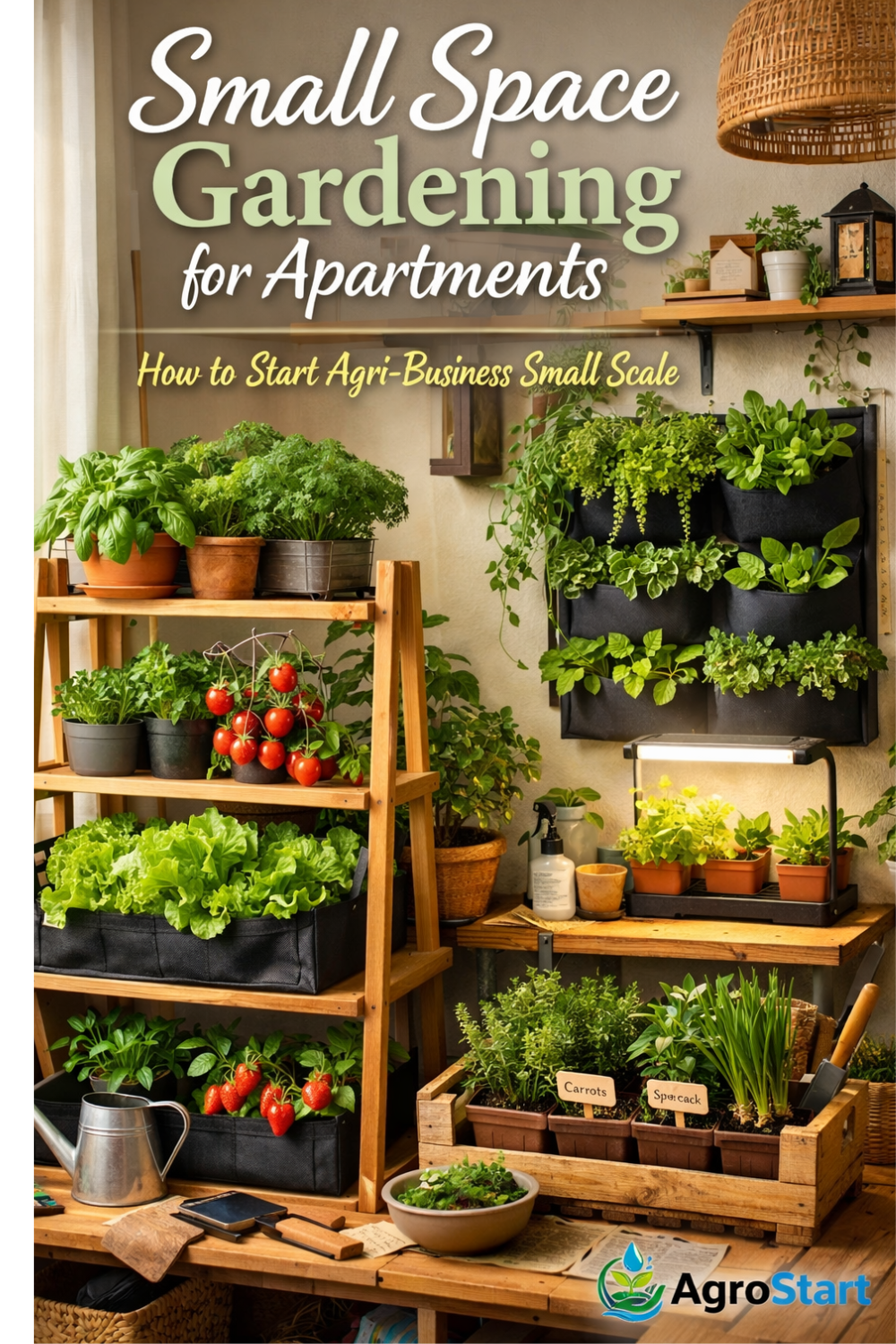
    Living in an apartment doesn’t mean you can’t enjoy gardening. In fact, small space gardening ideas for apartments are becoming more popular than ever. With the right plants and smart setup, you can grow beautiful greenery even in the smallest indoor spaces.

    This guide will show you practical, beginner-friendly ways to start indoor gardening in apartments, without needing a balcony or large space.

    Why Small Space Gardening Is Perfect for Apartments

    Apartment gardening is ideal because it allows you to:

    • 🌱 Grow plants in limited space
    • 🏠 Improve indoor air quality
    • đź§  Reduce stress and boost mood
    • đź’° Save money on herbs and greens
    • 🌿 Add natural beauty to your home

    Most importantly, indoor gardening works well for beginners who want simple, low-maintenance plants.

    1. Choose Plants Made for Small Spaces

    The first step is choosing the right plants. Not all plants grow well indoors, especially in apartments.

    Best Plants for Apartment Living

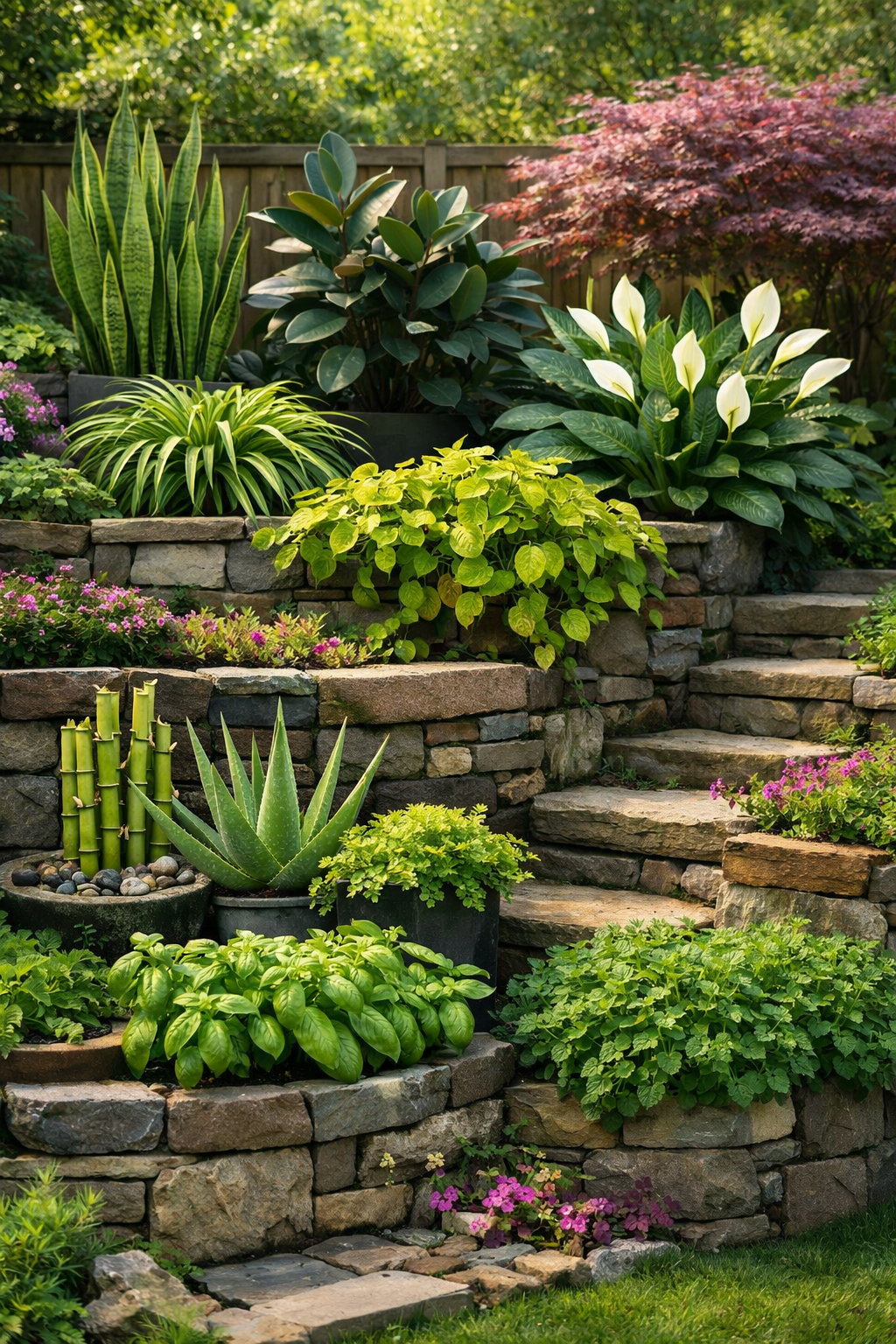
    • Snake Plant
    • Pothos
    • Spider Plant
    • ZZ Plant
    • Aloe Vera
    • Peace Lily
    • Herbs like Mint and Basil

    These plants stay compact, grow well in pots, and tolerate indoor light conditions.

    2. Use Vertical Space Wisely

    When floor space is limited, think vertical gardening.

    Easy Vertical Gardening Ideas

    • Wall-mounted shelves
    • Hanging planters
    • Plant hooks near windows
    • Ladder-style plant stands

    As a result, you can grow more plants without cluttering your apartment.

    3. Try Container Gardening for Apartments

    Container gardening is one of the easiest ways to garden indoors.

    Container Gardening Tips

    • Use pots with drainage holes
    • Choose lightweight containers
    • Match pot size to plant size
    • Avoid overcrowding

    In addition, containers make it easy to move plants closer to light when needed.

    4. Maximize Natural Light Indoors

    Light is essential for indoor plants. Most apartments don’t get full sunlight, but that’s okay.

    How to Improve Light for Plants

    • Place plants near windows
    • Use sheer curtains to soften light
    • Rotate plants weekly
    • Add affordable grow lights if needed

    Therefore, even low-light apartments can support healthy plants.

    5. Create a Small Indoor Herb Garden

    Herbs are perfect for small apartments because they grow fast and don’t need much space.

    Easy Herbs to Grow Indoors

    • Mint
    • Basil
    • Green onions
    • Parsley

    For example, a kitchen windowsill is often enough to grow fresh herbs year-round.

    6. Use Smart Storage + Plant Decor

    Combine storage and plants to save space.

    Smart Ideas

    • Plants on bookshelves
    • Pots on window ledges
    • Multi-purpose plant stands
    • Small tables with plants underneath

    This way, your apartment stays organized while still feeling green and fresh.

    7. Avoid Common Apartment Gardening Mistakes

    Many beginners fail because of simple mistakes.

    Common Mistakes to Avoid

    • ❌ Overwatering
    • ❌ Using poor-quality soil
    • ❌ Choosing plants that grow too large
    • ❌ Ignoring light needs

    Instead, start small, learn gradually, and add more plants over time.

    Tips for Successful Small Space Indoor Gardening

    To succeed with apartment gardening:

    • Use quality potting soil
    • Water only when soil feels dry
    • Choose beginner-friendly plants
    • Keep plants clean and dust-free
    • Be patient and consistent

    As a result, your indoor garden will grow healthier and stronger.

    Final Thoughts

    Small apartments can still be full of life and greenery. With the right small space gardening ideas for apartments, anyone can enjoy indoor gardening. Whether you grow houseplants, herbs, or decorative greenery, starting small is the key to success.

    🌿 Start simple, grow confidently, and enjoy a greener home.

    What is small space gardening for apartments?

    Small space gardening for apartments means growing plants indoors using limited space such as windowsills, shelves, corners, or vertical areas. It focuses on compact plants and smart layouts.

    Which plants are best for small apartments?

    The best plants for small apartments include snake plant, pothos, spider plant, ZZ plant, aloe vera, peace lily, and indoor herbs like mint and basil.

    Can I garden indoors without sunlight?

    Yes. Many indoor plants grow well in low or indirect light. You can also use affordable grow lights if natural sunlight is limited.

    How often should I water indoor plants in apartments?

    Most indoor plants should be watered only when the top soil feels dry. Overwatering is the most common mistake in apartment gardening.

    Is indoor gardening suitable for beginners?

    Absolutely. Indoor gardening is beginner-friendly, especially when you start with low-maintenance plants designed for small spaces.

    Do I need special tools for apartment gardening?

    No special tools are required. Basic pots, quality soil, and proper light are enough to start indoor gardening in an apartment.

    How to Start Small Space Gardening in an Apartment

    • Step : Choose the Right Spot

      Select a location with natural light, preferably near a window. If sunlight is limited, use a grow light to support healthy plant growth.

    • Step 2: Pick Beginner-Friendly Plants

      Start with low-maintenance indoor plants, such as:
      Snake Plant
      Pothos
      Spider Plant
      ZZ Plant
      These plants are forgiving and easy to care for.

    • Step 3: Use Proper Containers

      Choose pots with drainage holes so excess water can escape and roots do not rot.

    • Step 4: Add Quality Potting Soil

      Avoid cheap or garden soil. High-quality potting soil allows better airflow, drainage, and nutrient absorption for plant roots.

    • Step 5: Water Correctly

      Water your plants only when the top layer of soil feels dry. Overwatering is one of the most common indoor gardening mistakes.

    • Step 6: Maximize Vertical Space

      Save space by using:
      Shelves
      Hanging pots
      Wall planters
      This is ideal for small apartments.

    • Step 7: Maintain Regularly

      Clean the leaves, check light conditions, and trim dead or damaged leaves occasionally to keep plants healthy.
  • How to Start a Small-Scale Agri-Business (Step-by-Step Guide)

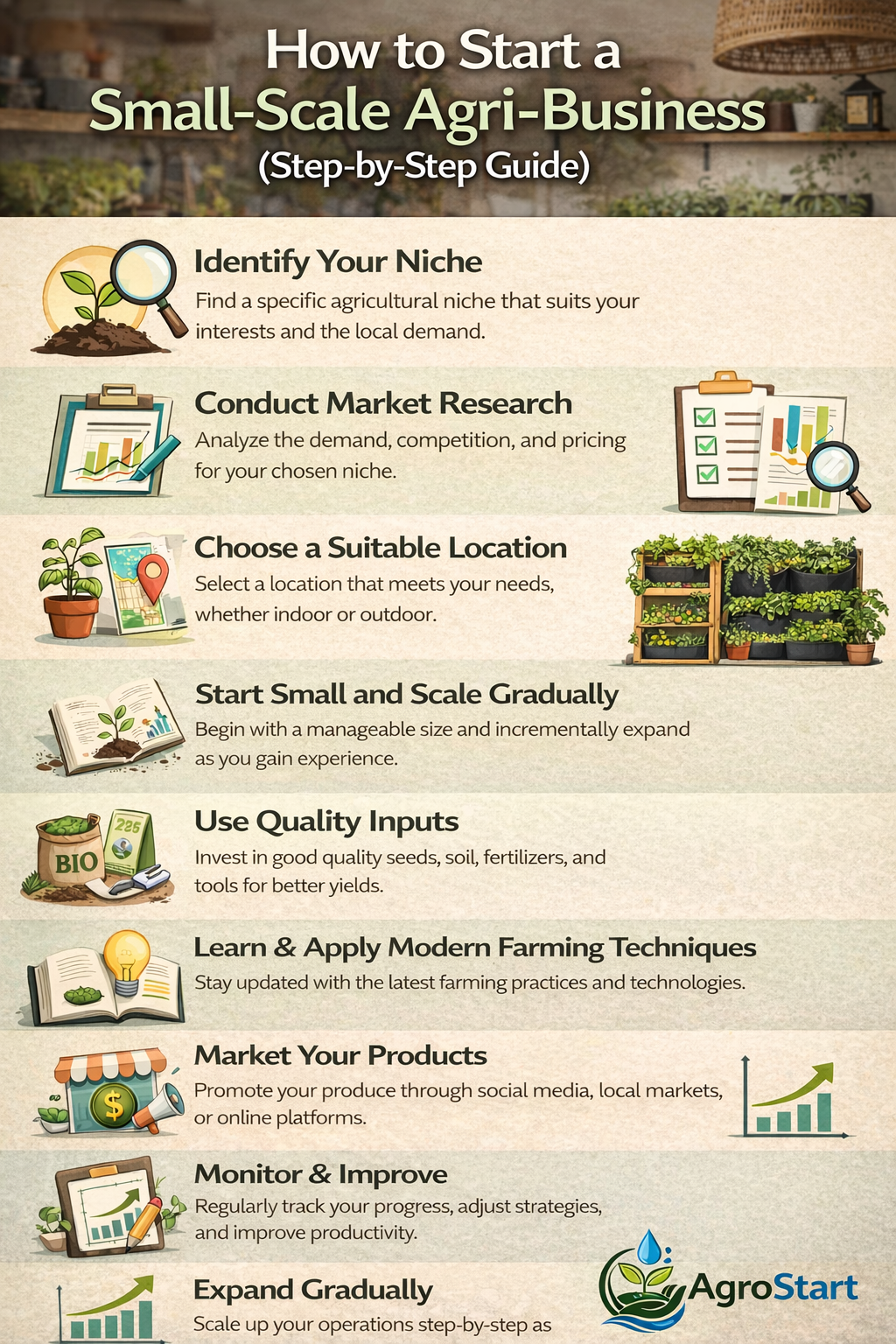
    How to Start a Small-Scale Agri-Business (Step-by-Step Guide)

    Starting a small-scale agri-business can be rewarding and profitable if done carefully. Whether you want to grow crops, vegetables, or raise livestock, following these steps will help you begin successfully.

    Step 1: Identify Your Niche

    Choose a specific type of agricultural business based on:

    • Market demand
    • Your interests and skills
    • Available resources

    Examples:

    • Vegetable farming
    • Poultry farming
    • Herb cultivation
    • Organic fruits

    Step 2: Conduct Market Research

    Understand your target market:

    • Who will buy your products?
    • What are the current prices?
    • What is the demand in your area?

    Tip: Talk to local vendors, check online marketplaces, and visit farmers’ markets.

    Step 3: Prepare a Business Plan

    Your business plan should include:

    • Type of products
    • Initial investment
    • Production plan
    • Marketing strategy
    • Expected profit

    A clear plan will guide your small-scale farm and attract potential partners or investors.

    Step 4: Choose a Suitable Location

    Factors to consider:

    • Soil quality
    • Water availability
    • Accessibility for transportation
    • Safety from pests

    Even a small backyard or rented land can work for small-scale agriculture.

    Step 5: Start Small and Scale Gradually

    Avoid investing in large areas initially. Start with:

    • Few crop beds or containers
    • Small livestock batches

    This reduces risk and allows you to learn practical farming skills.

    Step 6: Use Quality Inputs

    For crops:

    • Good seeds or seedlings
    • Fertilizers and compost
    • Proper tools and containers

    For livestock:

    • Healthy breeds
    • Nutritious feed
    • Clean housing

    Step 7: Learn & Apply Modern Farming Techniques

    • Drip irrigation or watering systems
    • Organic farming methods
    • Indoor or greenhouse farming (if applicable)
    • Digital farm management apps

    These techniques increase yield and reduce costs.

    Step 8: Market Your Products

    • Sell directly to local markets
    • Use social media for promotion
    • Partner with local restaurants or stores
    • Explore online marketplaces

    Step 9: Monitor & Improve

    • Track costs, sales, and profits
    • Note which crops or products perform best
    • Adjust production and marketing strategies

    Step 10: Expand Gradually

    Once you gain experience and consistent profits:

    • Increase production area
    • Add new products
    • Consider value-added products (e.g., jams, packaged herbs)

    âś… Result

    By following these steps, you can successfully start a small-scale agri-business, minimize risks, and gradually grow a profitable farming venture.

    What is a small-scale agri-business?

    A small-scale agri-business is a farm or agricultural venture with limited resources and area, focused on crops, livestock, or other agricultural products for local or niche markets.

    How much investment is needed to start a small-scale agri-business?

    The investment depends on the type of business, location, and scale. You can start small with backyard farming or container farming, gradually increasing investment as your business grows.

    Which crops are best for beginners?

    Beginner-friendly crops include vegetables like lettuce, spinach, herbs like mint and basil, and easy fruits like strawberries. Choose plants that are low-maintenance and grow well in your climate.

    Can I start an agri-business without land?

    Yes. You can start with container farming, hydroponics, or small backyard setups. Even apartments with windowsills or terraces can support small-scale indoor farming.

    How do I sell my products?

    You can sell your produce directly at local markets, to restaurants, through social media, or online marketplaces. Building relationships with local buyers is key to consistent sales.

    Is small-scale agri-business profitable?

    Yes, with proper planning, market research, and consistent effort, small-scale agri-businesses can be profitable and sustainable. Start small, track performance, and expand gradually.

    How to Start a Small-Scale Agri-Business (Step-by-Step)
    Starting a small-scale agri-business can be profitable and sustainable if done the right way. Follow these steps to start and grow your farm or agricultural venture successfully.

    1. Step 1: Identify Your Niche

      Choose a specific type of agricultural business based on:
      Market demand in your area
      Your skills and interest
      Available resources
      Examples: vegetable farming, poultry, herbs, or organic fruits.

    2. Step 2: Conduct Market Research

      Research your target market:
      Who will buy your products?
      Current prices and demand
      Potential competitors
      Tip: Visit local markets, online marketplaces, or talk to local farmers.

    3. Step 3: Create a Business Plan

      Include in your plan:
      Products or crops you will grow
      Initial investment and budget
      Production schedule
      Marketing strategy
      Expected profits
      A solid plan reduces risks and guides your growth.

    4. Step 4: Choose a Suitable Location

      Consider:
      Soil quality
      Water availability
      Accessibility for transport
      Safety from pests
      Even a small backyard or terrace can work.

    5. Step 5: Start Small

      Avoid overextending. Begin with:
      Few crop beds or containers
      Small livestock batches
      Learn and improve before expanding.

    6. Step 6: Use Quality Inputs

      For crops:
      High-quality seeds or seedlings
      Fertilizers and compost
      Proper tools
      For livestock:
      Healthy breeds
      Nutritious feed
      Clean housing

    7. Step 7: Learn Modern Farming Techniques

      Drip irrigation
      Organic methods
      Indoor or greenhouse farming
      Digital farm management tools
      These improve productivity and reduce waste.

    8. Step 8: Market Your Products

      Sell directly to local markets
      Partner with restaurants or stores
      Use social media promotion
      Explore online marketplaces

    9. Step 9: Track and Improve

      Monitor costs, sales, and profits
      Adjust production or marketing strategies based on performance
      Keep learning to improve efficiency

    10. Step 10: Expand Gradually

      Once profitable:
      Increase production area
      Add new products
      Consider value-added products like packaged herbs, jams, or organic products

    Thanks welcome AgroStart

  • 10 Easy Indoor Plants Anyone Can Grow at Home

    10 Easy Indoor Plants Anyone Can Grow at Home

    Growing indoor plants doesn’t have to be difficult. In fact, even if you’ve never cared for a plant before, there are many easy indoor plants that anyone can grow at home. These plants require little maintenance, adapt well to indoor conditions, and are perfect for beginners.

    In this guide, you’ll discover 10 easy indoor plants that thrive in small spaces and don’t require much attention.

    Why Choose Easy Indoor Plants?

    Easy indoor plants are ideal for beginners because they:

    • Require little watering
    • Survive in low to medium light
    • Grow well in containers
    • Forgive small mistakes

    As a result, you can enjoy greenery at home without worry.

    1. Snake Plant (Sansevieria)

    The snake plant is one of the most hardy indoor plants available.

    Why it’s easy:

    • Tolerates low light
    • Needs only occasional watering
    • Improves indoor air quality

    This plant is perfect for anyone who often forgets to water.

    2. Pothos

    Pothos is a fast-growing indoor plant with trailing vines.

    Why beginners love it:

    • Thrives in low to bright light
    • Requires very little care
    • Looks great in hanging pots

    Because of its flexibility, pothos works well in almost any room.

    3. Spider Plant

    The spider plant is known for its long, arching leaves.

    Key advantages:

    • Easy to grow
    • Produces baby plants
    • Performs well in indirect light

    In addition, spider plants are safe for homes with pets.

    4. Aloe Vera

    Aloe vera is both decorative and useful.

    Why it’s beginner-friendly:

    • Stores water in its leaves
    • Needs sunlight but little watering
    • Gel can be used for skin care

    It grows best on sunny windowsills.

    5. ZZ Plant

    The ZZ plant is almost impossible to kill.

    Why it’s great for beginners:

    • Thrives in low light
    • Needs very little water
    • Grows slowly and neatly

    Therefore, it’s ideal for busy people.

    6. Peace Lily

    Peace lilies add beauty with their elegant white flowers.

    The reason they’re easy:

    • They show when they need water
    • Grow well in indirect light
    • Help improve indoor air quality

    However, keep them away from pets.

    7. Lucky Bamboo

    Lucky bamboo grows well in water or soil.

    Why beginners choose it:

    • Requires minimal care
    • Thrives in low light
    • Looks great on tables and counters

    As a result, it’s perfect for small spaces.

    8. Mint

    Mint is one of the easiest plants to grow indoors.

    Why it’s great:

    • Grows quickly
    • Needs consistent light and water
    • Can be harvested regularly

    For example, mint can be used in tea or cooking.

    9. Basil

    Basil is another beginner-friendly indoor plant.

    Why it’s popular:

    • Grows well in pots
    • Loves full sunlight
    • Perfect for kitchen windows

    Over time, regular harvesting helps it grow healthier.

    10. Rubber Plant

    Rubber plants are both stylish and easy to care for.

    Why beginners love them:

    • Large, glossy leaves
    • Tolerate indoor light
    • Only need watering when soil is dry

    This plant adds a modern touch to any room.

    Tips for Successful Indoor Plant Growing

    To keep your indoor plants healthy:

    • Use quality potting soil
    • Avoid overwatering
    • Ensure proper drainage
    • Place plants near natural light or use grow lights

    Most importantly, start with easy plants and build confidence over time.

    Final Thoughts

    Easy indoor plants make gardening simple and enjoyable. Whether you choose houseplants or herbs, these plants help beginners succeed without frustration. By starting small, you’ll soon enjoy a healthy, green home.

    What are the easiest indoor plants for beginners?

    The easiest indoor plants for beginners include snake plants, pothos, spider plants, ZZ plants, aloe vera, and peace lilies. These plants are low-maintenance and adapt well to indoor conditions.

    Do easy indoor plants need direct sunlight?

    No. Most easy indoor plants grow well in indirect or low to medium light. However, placing them near a bright window helps them grow stronger and healthier.10 Easy Indoor Plants Anyone Can Grow at Home.

    How often should indoor plants be watered?

    Indoor plants should only be watered when the top soil feels dry. Overwatering is the most common mistake beginners make.

  • Indoor Gardening for Absolute Beginners (2026 Guide)

    Indoor Gardening for Absolute Beginners (2026 Guide)

    Indoor gardening is one of the easiest and most affordable ways for beginners to start growing plants at home. In fact, even if you live in a small apartment or have no outdoor space, you can still grow healthy plants indoors.
    That’s why this 2026 beginner’s guide will show you exactly how to get started with indoor gardening step by step—even if you’ve never grown a plant before.

    What Is Indoor Gardening?

    Indoor gardening simply means growing plants inside your home using pots, containers, natural sunlight, or grow lights. For beginners, this method is ideal because it requires very little space and effort.

    In most cases, you only need:

    • A small space
    • Low start-up costs
    • Simple equipment
    • Easy maintenance

    As a result, you can grow herbs, vegetables, and houseplants all year round.

    Benefits of Indoor Gardening for Beginners

    Indoor gardening is beginner-friendly for many reasons. For example, it allows you to grow food and plants without depending on outdoor conditions.

    Some key benefits include:

    • 🌱 Fresh home-grown food, such as herbs and leafy greens
    • 🏠 No need for a large outdoor area
    • đź’§ Less water usage compared to outdoor gardening
    • đź§  Reduced stress and better mental health
    • đź’° Lower costs than traditional outdoor gardening

    Overall, indoor gardening is a smart and practical choice for beginners.

    Best Indoor Plants for Beginners (2026)

    🌿 Small Plants (Easy to Start)

    If you’re just starting out, small plants are the best option.

    • Basil
    • Mint
    • Dersi

    These plants grow quickly and, most importantly, require very little care.

    🥬 Indoor Gardening Vegetables

    Some vegetables also grow well indoors, especially in small containers.

    • Lettuce
    • Spinach
    • Green onions

    Because of their size, they are perfect for windowsills and compact spaces.

    🪴 Low-Maintenance Houseplants

    If you prefer decorative plants, houseplants are a great choice.

    • Snake plant
    • Pothos
    • Spider plant

    These plants are very forgiving. In other words, they can survive even if you forget to water them sometimes.

    What You Need to Start an Indoor Garden

    You don’t need expensive tools to begin. Instead, start simple with the basics:

    • Pots or containers with drainage holes
    • Good-quality potting soil (not garden soil)
    • A light source, such as:
      • A sunny window, or
      • An affordable grow light
    • A watering can or bottle
    • Beginner-friendly plants

    👉 Important tip: Avoid cheap potting soil—it’s the #1 beginner’s mistake because it blocks water, air, and nutrients from reaching plant roots.

    Step-by-Step Indoor Garden Setup (Beginner Friendly)

    Step 1: Choose the Right Location

    First, pick a location that gets:

    • 4–6 hours of sunlight, or
    • Enough space for grow lights

    Step 2: Choose Starter Plants

    Next, begin with herbs or houseplants. Later on, you can move to vegetables once you gain confidence.

    Step 3: Prepare Containers and Soil

    After that:

    • Fill your pots with potting soil
    • Make sure all drainage holes are open

    This step is crucial for healthy roots.

    Step 4: Plant Carefully

    Now it’s time to plant:

    • Follow seed-depth instructions
    • Avoid overcrowding the plants

    Step 5: Water Properly

    Finally:

    • Water only when the soil feels dry
    • Never overwater the pots

    As a result, your plants will grow stronger and healthier.

    Common Indoor Gardening Mistakes (And How to Avoid Them)

    Many beginners struggle at first. However, most problems come from a few common mistakes:

    What is the most common beginner mistake in indoor gardening?

    The biggest mistake is using cheap or garden soil that blocks water, air, and nutrients from reaching the roots. Other mistakes include overwatering, insufficient light, and starting with difficult plants.

    ❌ Overwatering
    ❌ Too much or too little light
    ❌ Poor-quality soil
    ❌ Starting with difficult plants

    âś… The solution: Start small, learn from experience, and then expand gradually.