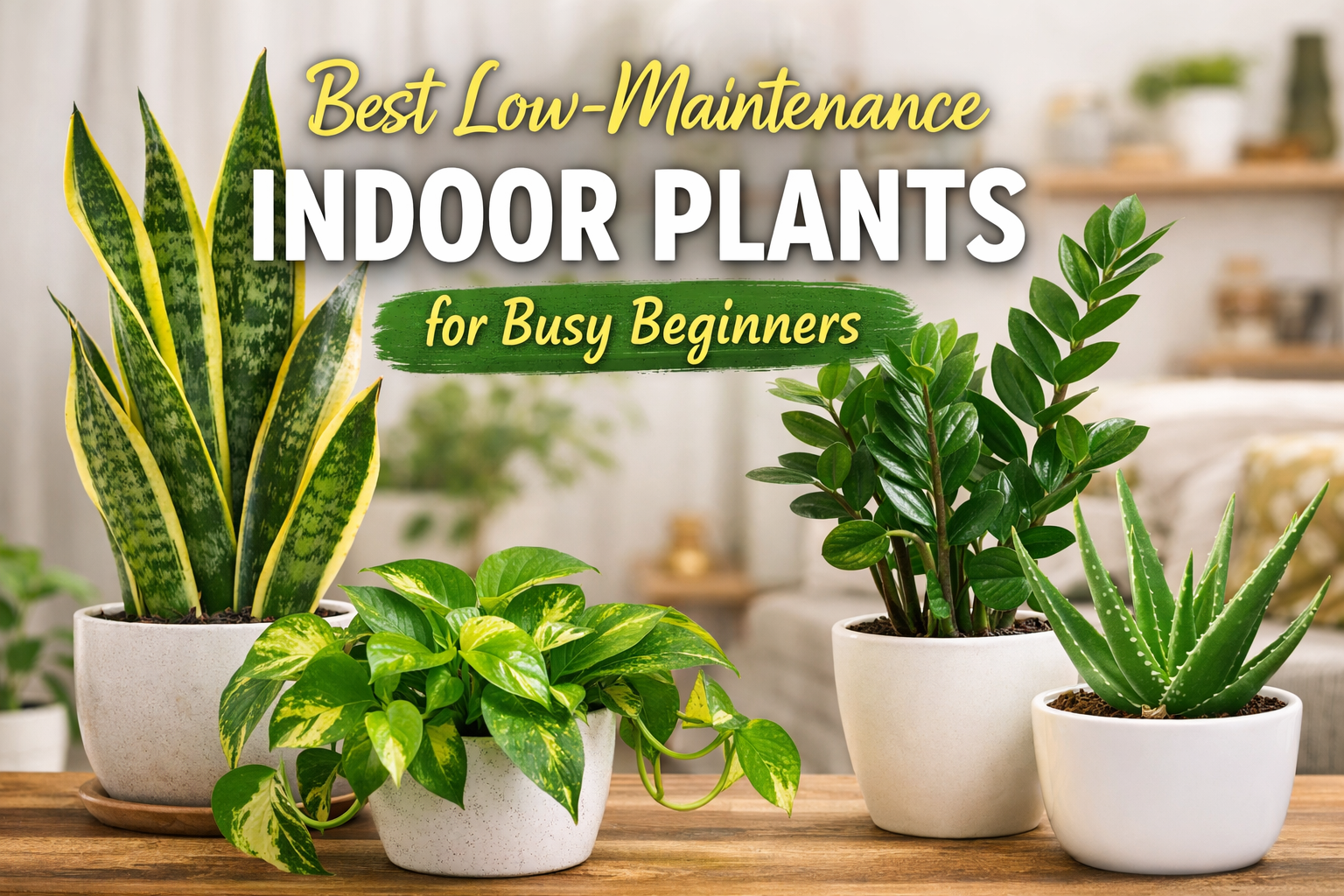
Indoor gardening is becoming increasingly popular, especially among beginners who want to enjoy plants without spending too much time on care. If you are busy, new to gardening, or simply want stress-free greenery at home, low-maintenance indoor plants are the perfect choice.
This complete guide will walk you through the best low-maintenance indoor plants for busy beginners, explain why they are easy to care for, and show you how to avoid common mistakes that kill houseplants.
Why Low-Maintenance Indoor Plants Are Perfect for Beginners
Many beginners fail at indoor gardening because they start with plants that require too much attention. Low-maintenance indoor plants are different. They are hardy, forgiving, and adaptable to indoor environments.
Benefits of Low-Maintenance Indoor Plants
- Require less frequent watering
- Grow well in low or indirect light
- Survive common beginner mistakes
- Improve indoor air quality
- Add beauty to homes and apartments
- Perfect for busy lifestyles and small spaces
If you are new to indoor gardening, starting with easy-care plants builds confidence and long-term success.
What Makes a Plant Low-Maintenance?
Before choosing plants, it’s important to understand what “low-maintenance” really means.
A low-maintenance indoor plant usually:
- Tolerates irregular watering
- Does not need direct sunlight
- Grows slowly
- Does not require frequent pruning
- Survives indoor temperature changes
These qualities make them ideal for beginners and busy people.
7 Best Low-Maintenance Indoor Plants for Busy Beginners
Below are the best indoor plants that require minimal effort while still thriving indoors.
1. Snake Plant (Sansevieria)
The Snake Plant is widely considered the best indoor plant for beginners.
Light: Low to bright indirect light
Watering: Every 2–3 weeks
Maintenance Level: Very low
Why Snake Plant Is Perfect for Beginners
- Survives low light conditions
- Stores water in its leaves
- Improves indoor air quality
- Can survive weeks without watering
Beginner Tip: Overwatering is the only major mistake to avoid.
2. ZZ Plant (Zamioculcas zamiifolia)
The ZZ Plant is famous for surviving neglect.
Light: Low to medium light
Watering: Every 2–3 weeks
Maintenance Level: Very low
Benefits of ZZ Plant
- Thick roots store water
- Shiny, attractive leaves
- Thrives in offices and apartments
- Tolerates poor lighting
This plant is ideal for people who travel or forget to water regularly.
3. Pothos (Devil’s Ivy)
Pothos is one of the easiest indoor plants to grow.
Light: Low to bright indirect light
Watering: When topsoil is dry
Maintenance Level: Low
Why Beginners Love Pothos
- Fast-growing and forgiving
- Can be grown in pots or hanging baskets
- Recovers quickly from neglect
- Excellent for shelves and corners
Pothos is often recommended as the first indoor plant for beginners.
4. Spider Plant (Chlorophytum comosum)
The Spider Plant is beginner-friendly and visually appealing.
Light: Bright indirect light
Watering: Once a week
Maintenance Level: Low
Advantages of Spider Plant
- Produces baby plants easily
- Pet-friendly
- Improves air quality
- Adapts well to indoor environments
Spider plants are perfect for bedrooms and living rooms.
5. Peace Lily (Spathiphyllum)
The Peace Lily is both beautiful and easy to care for.
Light: Low to medium light
Watering: When leaves droop
Maintenance Level: Low
Why Peace Lily Is Beginner-Friendly
- Shows clear signs when it needs water
- Grows well in low light
- Produces elegant white flowers
- Helps remove indoor toxins
Peace lilies are ideal for beginners who want flowering plants.
6. Aloe Vera
Aloe Vera is a low-maintenance plant with practical benefits.
Light: Bright indirect or sunlight
Watering: Every 2–3 weeks
Maintenance Level: Low
Benefits of Aloe Vera
- Medicinal uses
- Thrives in dry indoor air
- Requires very little water
- Perfect for sunny windows
Aloe Vera is especially suitable for warm and dry climates.
7. Cast Iron Plant (Aspidistra)
As the name suggests, the Cast Iron Plant is extremely tough.
Light: Low light
Watering: Every 2 weeks
Maintenance Level: Very low
Why It’s Great for Beginners
- Tolerates neglect
- Survives low light
- Resistant to pests
- Ideal for dark rooms
This plant is perfect for absolute beginners.
Basic Care Tips for Low-Maintenance Indoor Plants
Even easy plants need basic care. Follow these simple rules to keep them healthy.
Use the Right Soil
Always use well-draining potting soil. Cheap or compacted soil is the number one beginner mistake.
Choose Pots with Drainage Holes
Drainage holes prevent root rot and overwatering problems.
Don’t Overwater
Water only when the soil is dry. Most indoor plants die from too much water, not too little.
Place Plants Correctly
Avoid direct sunlight unless the plant requires it. Indirect light works best for most indoor plants.
Common Indoor Gardening Mistakes Beginners Make
Avoid these common errors to keep your plants alive.
- Overwatering plants
- Using poor-quality soil
- Placing plants in extreme sunlight
- Moving plants too often
- Ignoring drainage
Understanding these mistakes will save your plants and your money.
How to Choose the Right Plant for Your Home
Before buying any indoor plant, consider:
- Light availability in your room
- Time available for care
- Space size
- Temperature consistency
Matching plants to your environment ensures long-term success.
The Snake Plant is the easiest indoor plant due to its low water and light requirements.
Most low-maintenance indoor plants need watering every 1–3 weeks, depending on soil dryness.
Yes. Plants like ZZ Plant, Snake Plant, and Cast Iron Plant thrive in low-light conditions.
Yes. They are perfect for apartments, offices, and small homes.
Some plants help reduce indoor pollutants and improve overall air quality.
Final Thoughts: Start Small and Grow with Confidence
Indoor gardening does not have to be difficult. By choosing low-maintenance indoor plants, busy beginners can enjoy greenery without stress. Start with one or two plants, learn their needs, and slowly build your indoor garden.
With the right plants and simple care, anyone can succeed at indoor gardening.
Leave a Reply