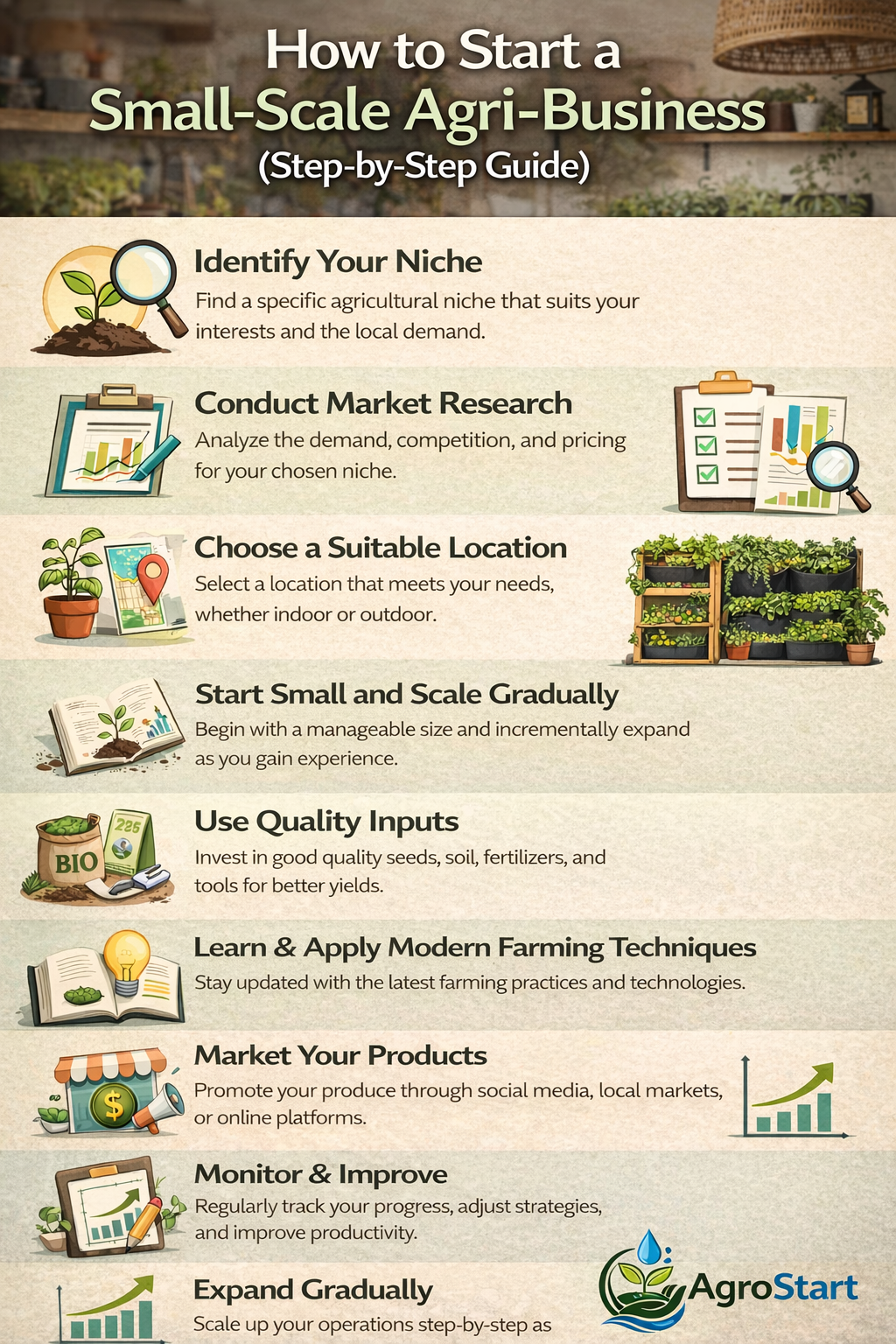
Starting a small-scale agri-business can be rewarding and profitable if done carefully. Whether you want to grow crops, vegetables, or raise livestock, following these steps will help you begin successfully.
Step 1: Identify Your Niche
Choose a specific type of agricultural business based on:
- Market demand
- Your interests and skills
- Available resources
Examples:
- Vegetable farming
- Poultry farming
- Herb cultivation
- Organic fruits
Step 2: Conduct Market Research
Understand your target market:
- Who will buy your products?
- What are the current prices?
- What is the demand in your area?
Tip: Talk to local vendors, check online marketplaces, and visit farmers’ markets.
Step 3: Prepare a Business Plan
Your business plan should include:
- Type of products
- Initial investment
- Production plan
- Marketing strategy
- Expected profit
A clear plan will guide your small-scale farm and attract potential partners or investors.
Step 4: Choose a Suitable Location
Factors to consider:
- Soil quality
- Water availability
- Accessibility for transportation
- Safety from pests
Even a small backyard or rented land can work for small-scale agriculture.
Step 5: Start Small and Scale Gradually
Avoid investing in large areas initially. Start with:
- Few crop beds or containers
- Small livestock batches
This reduces risk and allows you to learn practical farming skills.
Step 6: Use Quality Inputs
For crops:
- Good seeds or seedlings
- Fertilizers and compost
- Proper tools and containers
For livestock:
- Healthy breeds
- Nutritious feed
- Clean housing
Step 7: Learn & Apply Modern Farming Techniques
- Drip irrigation or watering systems
- Organic farming methods
- Indoor or greenhouse farming (if applicable)
- Digital farm management apps
These techniques increase yield and reduce costs.
Step 8: Market Your Products
- Sell directly to local markets
- Use social media for promotion
- Partner with local restaurants or stores
- Explore online marketplaces
Step 9: Monitor & Improve
- Track costs, sales, and profits
- Note which crops or products perform best
- Adjust production and marketing strategies
Step 10: Expand Gradually
Once you gain experience and consistent profits:
- Increase production area
- Add new products
- Consider value-added products (e.g., jams, packaged herbs)
✅ Result
By following these steps, you can successfully start a small-scale agri-business, minimize risks, and gradually grow a profitable farming venture.
A small-scale agri-business is a farm or agricultural venture with limited resources and area, focused on crops, livestock, or other agricultural products for local or niche markets.
The investment depends on the type of business, location, and scale. You can start small with backyard farming or container farming, gradually increasing investment as your business grows.
Beginner-friendly crops include vegetables like lettuce, spinach, herbs like mint and basil, and easy fruits like strawberries. Choose plants that are low-maintenance and grow well in your climate.
Yes. You can start with container farming, hydroponics, or small backyard setups. Even apartments with windowsills or terraces can support small-scale indoor farming.
You can sell your produce directly at local markets, to restaurants, through social media, or online marketplaces. Building relationships with local buyers is key to consistent sales.
Yes, with proper planning, market research, and consistent effort, small-scale agri-businesses can be profitable and sustainable. Start small, track performance, and expand gradually.
How to Start a Small-Scale Agri-Business (Step-by-Step)
Starting a small-scale agri-business can be profitable and sustainable if done the right way. Follow these steps to start and grow your farm or agricultural venture successfully.
- Step 1: Identify Your Niche
Choose a specific type of agricultural business based on:
Market demand in your area
Your skills and interest
Available resources
Examples: vegetable farming, poultry, herbs, or organic fruits. - Step 2: Conduct Market Research
Research your target market:
Who will buy your products?
Current prices and demand
Potential competitors
Tip: Visit local markets, online marketplaces, or talk to local farmers. - Step 3: Create a Business Plan
Include in your plan:
Products or crops you will grow
Initial investment and budget
Production schedule
Marketing strategy
Expected profits
A solid plan reduces risks and guides your growth. - Step 4: Choose a Suitable Location
Consider:
Soil quality
Water availability
Accessibility for transport
Safety from pests
Even a small backyard or terrace can work. - Step 5: Start Small
Avoid overextending. Begin with:
Few crop beds or containers
Small livestock batches
Learn and improve before expanding. - Step 6: Use Quality Inputs
For crops:
High-quality seeds or seedlings
Fertilizers and compost
Proper tools
For livestock:
Healthy breeds
Nutritious feed
Clean housing - Step 7: Learn Modern Farming Techniques
Drip irrigation
Organic methods
Indoor or greenhouse farming
Digital farm management tools
These improve productivity and reduce waste. - Step 8: Market Your Products
Sell directly to local markets
Partner with restaurants or stores
Use social media promotion
Explore online marketplaces - Step 9: Track and Improve
Monitor costs, sales, and profits
Adjust production or marketing strategies based on performance
Keep learning to improve efficiency - Step 10: Expand Gradually
Once profitable:
Increase production area
Add new products
Consider value-added products like packaged herbs, jams, or organic products
Thanks welcome AgroStart